
Southern and Western African Mythology
By Bayleigh Toth
Throughout your life, you may have heard stories of Greek mythology, Chinese mythology, or other popular ones. Perhaps you’ve heard about Poseidon or Pangu. But do you know about Lozi mythology? Igbo mythology?
What if I told you that some of these stories might even be older than the typical mythologies you hear about?
Ancient African beliefs are hardly discussed. This may be because of systematic racism across history and the forced Christianization of ethnic minorities. That’s exactly why we must learn about African history and mythology, so that we can deepen our understanding of people whose voices have long been suppressed.
Southern African Mythology

“Oral Tradition” is a term used to describe the practice of passing down history and culture by telling it from one generation to the next, rather than writing it down. South Africa is rich in oral traditions, with much of its folklore passed down from person to person.
Old tales such as “Little Hare Harelip” and “The legend of Queen Modjadji” reveal depths about historical African beliefs. Unlike Christian tales, where women are often weak and distressed, South African folktales frequently present women as goddesses in high positions of power, who don’t need to be saved by men.
The San people believed in the trickster god named Kaggen, who can transform into a mantis. In Akan, there is Nyame, who created the world and is quite divine. The Igbo people believed in Ala, a feminine spirit of the earth. Amadioha, who represents justice and strength, and Ekwensu, who is very talented at bargaining and trading.
These oral traditions have helped preserve the African people’s history despite forced illiteracy under slavery.
Western African Mythology
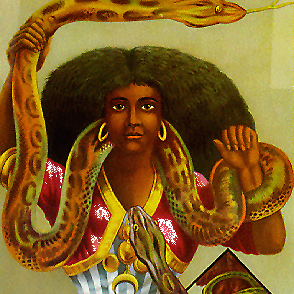
West African myths consist of deities, creatures, and other tales from a plethora of ethnic groups.
The people of Benin believed in Aziza. These were small creatures who gave good magic to humans, almost similar to fairies. The Nigerians believed in many different beings, such as the Egberes—small evil spirits who resided in bushes, lived on small mats, and cried all the time for no particular reason. Perhaps the Nigerians feared strangers from unfamiliar areas.
Northern Nigerians believed in Werehyenas, humans that could transform into hyenas. Mami Wata are spirits that are very similar to mermaids in the sense that they often dwell within oceans and rivers and appear to be human. Mami Wata may have a snake accompanying her, too. Western African beliefs are akin to European folktales, containing distinct fairies and mermaids.
Learning about these beliefs may help us understand the traditions of African people and cultivate more respect for their beautiful and unique culture. It’s important that we preserve this part of history, as for so many years, European colonizers have tried to destroy their practices. Furthermore, throughout school, especially in history classes, children are often only taught through white perspectives.
Consider taking the time to learn about aspects of black history you may not know, so that you can learn the perspectives of all humans.
 Empathify
Leave a comment